
To Maldives or Not to Maldives
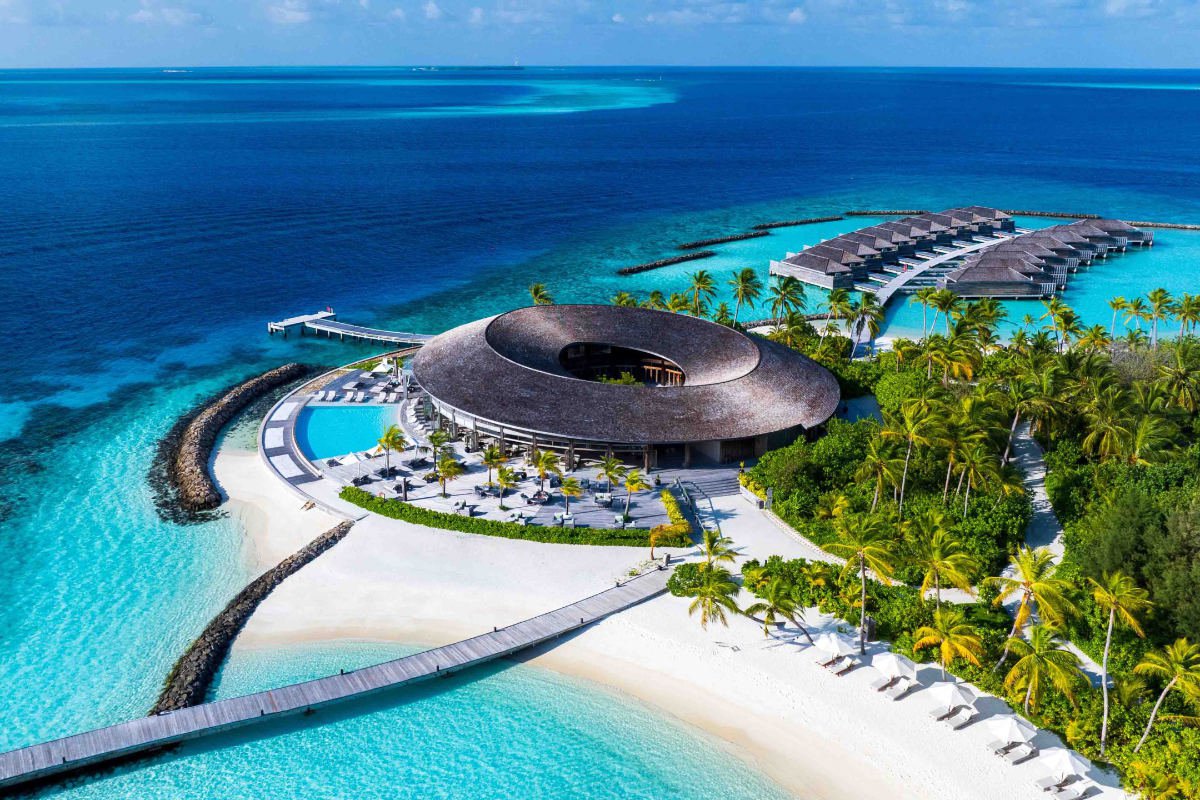
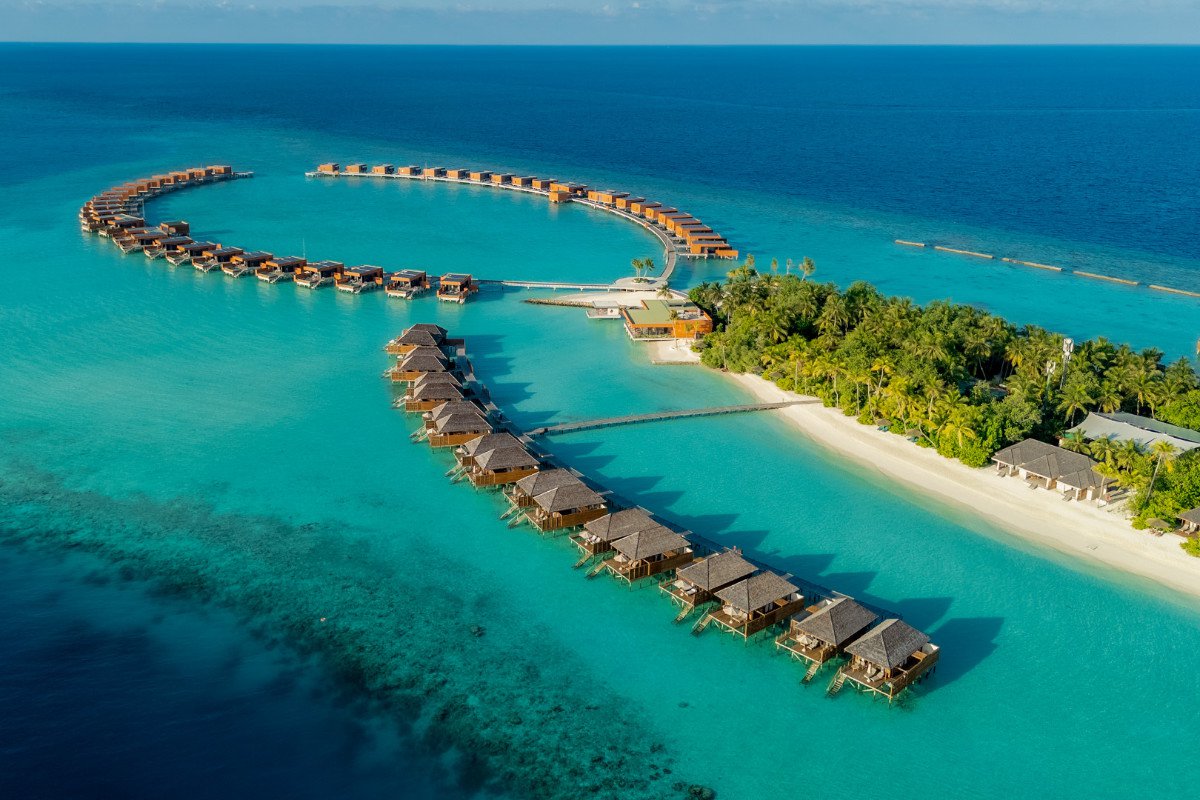 Veligandu photo courtesy of Crown & Champa Resorts.
THE MALDIVES — Have you been to the Maldives? I hadn’t, and for years I haven’t been sure what to make of them. Are these dots of island atolls in the middle of a blue ocean even real or a fantastical tropical mirage? Is it okay to visit if they are sinking from global warming? And what is there to do other than chill out in an overwater bungalow at a fancy resort purpose-built for honeymooners and usually owned by a multinational hotel chain?
That’s what I had on my mind when I was invited on a press trip to the Maldives last spring to two Crown & Champa Resorts. That CCR is a locally owned Maldivian company was important, as I would always rather support the local economy instead of, you know, driving more attention and funds to yet another Marriott.
But first I had to learn how to pronounce the country, because I kept getting it wrong. (The sound is E, not I. It’s Maldives as in “divas” and not “dives into the sea.”)
Then I had to remember what an atoll was: a ring of coral islands around a lagoon. The Maldives has 1126 islands grouped into 26 atolls. From top to bottom, the country spreads across 35,000 square miles in the Indian Ocean, but only 115 miles of that are actual land.
Tourism came to the Maldives in 1972, and Crown & Champa opened their first resort, Meeru, in 1976. Today their portfolio has ten resorts, all built on natural islands with rigorous environmental standards. (You can’t be in the Maldives and not think about sustainability, rising sea levels, and environmental stewardship, unless you’re a bonehead.)
That tourism is a major driver in the nation’s economy is clear from the moment visitors land at Velana International Airport in the capital, Malé. Giant maps on the terminal walls detail the locations of the resort they are most likely headed to — Joali, Westin, Cheval Blanc, Four Seasons, and The Standard among them, who all have dedicated information desks nearby. From Velana, visitors are shuttled to the nearby seaplane terminal to await their transfer to their island. It’s a little chaotic, but it sorts itself out.
And I gotta say, arriving anywhere by seaplane is undeniably spectacular.
My flight aboard Trans Maldivian Airways (the pilot wore flip-flops) flew past container ships in the port, rising above Malé’s skyscrapers and nearby resorts, giving me my first glimpse at the ubiquitous overwater bungalows for which the Maldives are so famous. And the waters: blue, so blue. Like, crayon-box blue.
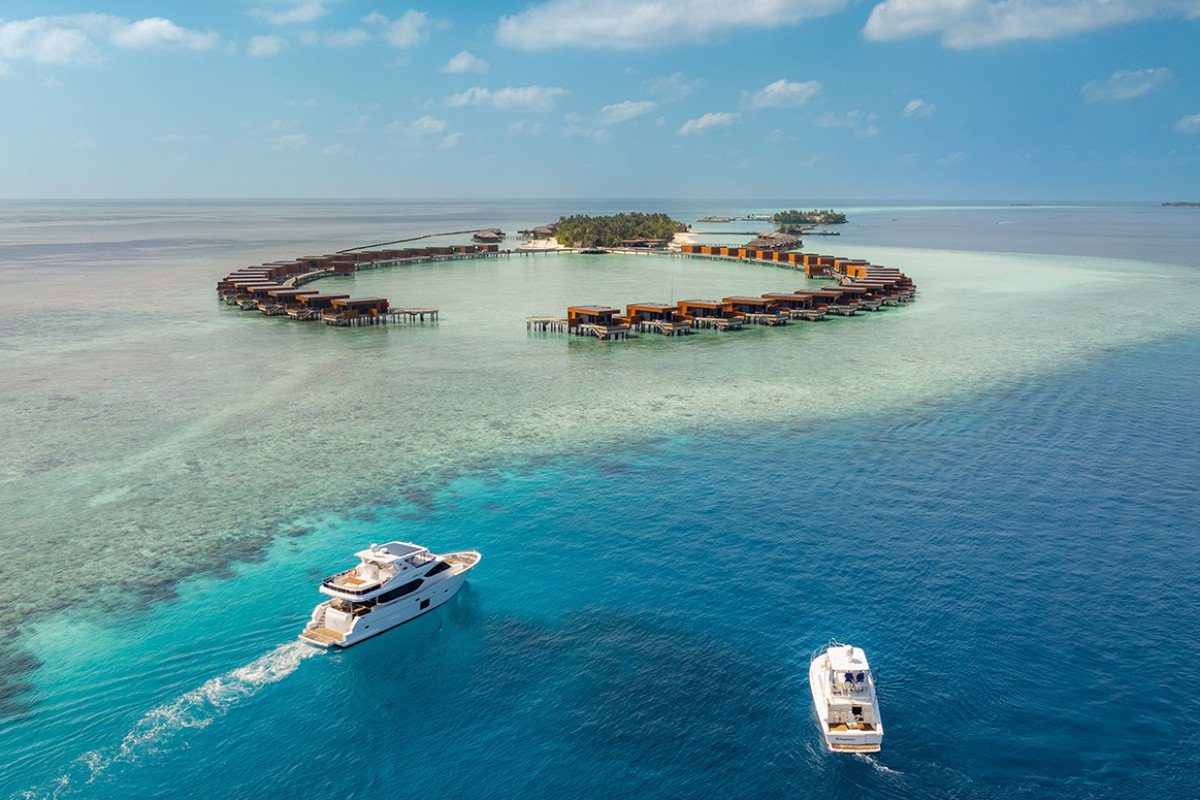
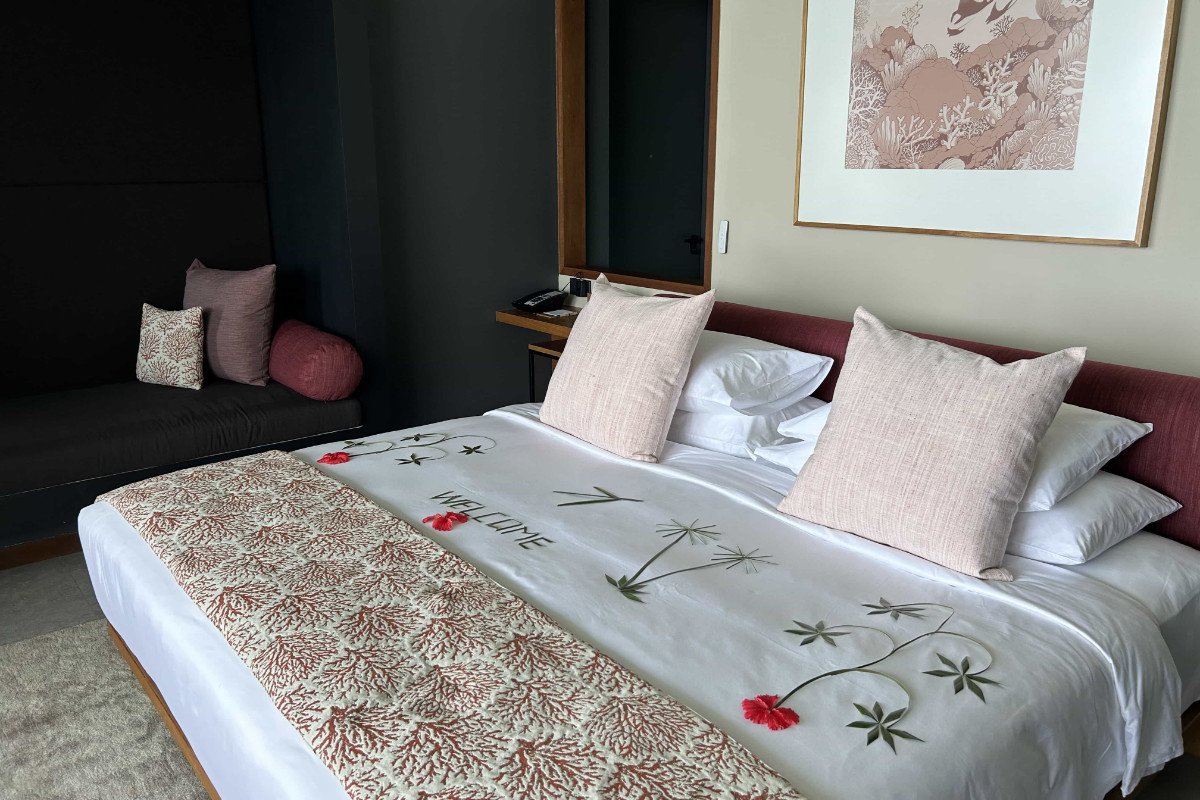
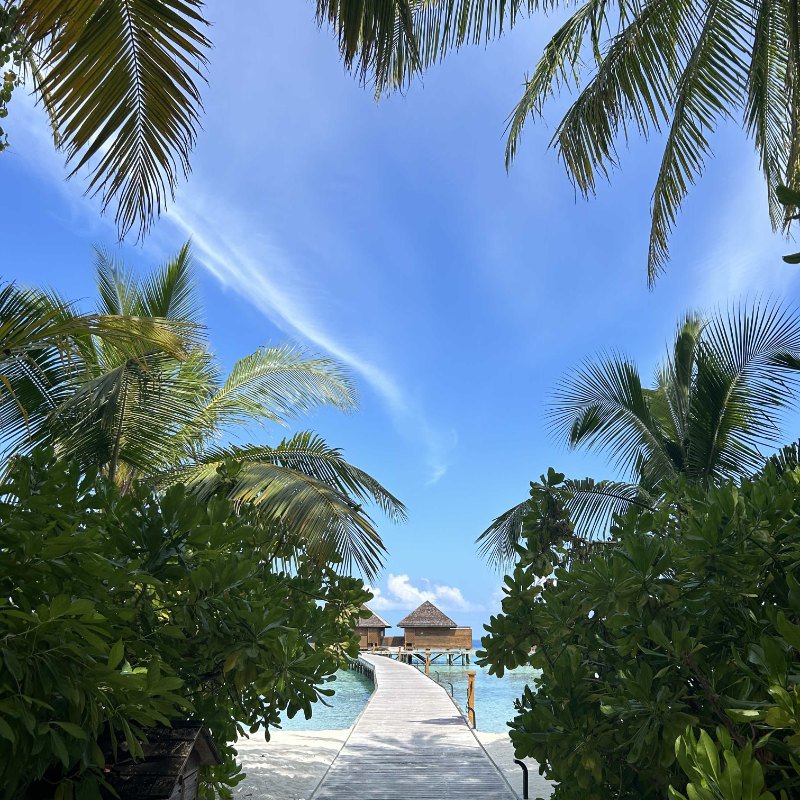
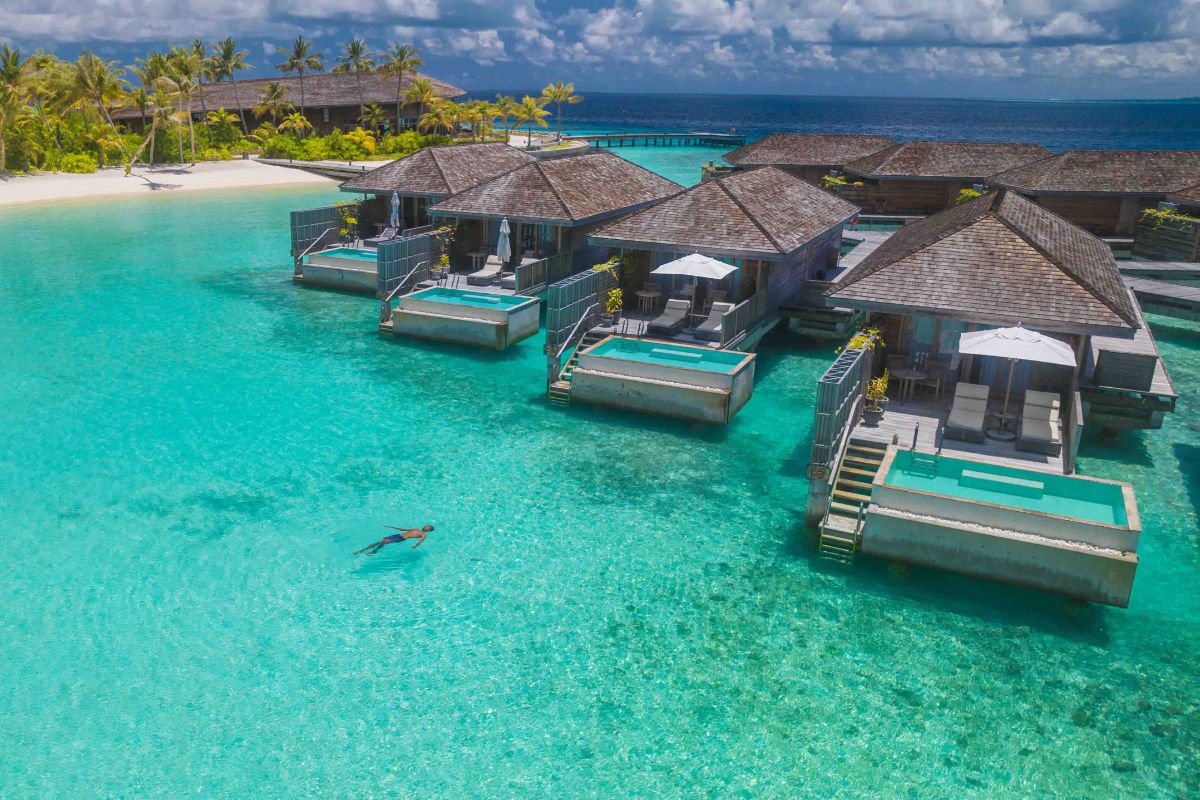
Twenty minutes later, we landed at Veligandu, and in no time I was whisked into my Sunset Ocean Pool Villa, where I found “Welcome” spelled out in flowers and palm fronds on my king-size bed. The outdoor deck had an infinity pool and a staircase down to the sea. The villa’s flat roof was lined with solar panels (the resort’s 3000+ solar panels cover almost all of its energy needs), while inside the long hallway had a glass floor that proved to be very entertaining. The overnight flight from London had been cramped, and as I did some de-kinking yoga over the glass, I swear a few fish stopped to look up at me downward dogging. This trip was off to a good start.
At Veligandu, the pool villas form an oval, 25 on each side, with sunrise or sunset views. Of the 100 total villas, most are of the overwater variety. The beach villas, surrounded by sand and dense palms and vegetation, are just as lovely in their own way. The decor in all the villas is minimalist — lots of dark woods, textiles with coral or leaf-like patterns, sofas for napping, outdoor loungers, big closets, spacious bathrooms, deep tubs. In other words: super comfortable.
I had four days at Veligandu. I did a lot and not very much. I discovered new tropical fruits (rose apple, snake fruit, and longan) at the buffet at the Asian fusion restaurant Dhonveli and ate richly layered desserts at the fine dining restaurant Raalhu. (The food was universally fresh and excellent.) I was served a floating breakfast in my infinity pool. I drank a lot of rum concoctions from coconuts and danced until midnight to ‘80s disco at Thundi bar. I played pickleball for the first time, and nearly fainted after a HIIT workout in the sand. I swam out to the sea deck, then back to my beach chair for a snooze. I met a German couple, longtime Veligandu regulars, and took notes on a Namibian hotel they had recently loved. Along with the other journalists on the trip, I paddled a sea kayak around the atoll, then fell asleep five minutes into an excellent massage at the spa. We took a sunset cruise on a traditional dhoni boat, and were childishly thrilled that a pod of frisky dolphins joined us for a good portion of the ride. We went on a late-morning reef snorkel with Sara, an instructor from the resort’s Ocean Sports Center, who taught us the difference between the green sea and the hawksbill turtles we followed along their underwater rounds. (It’s all about their beaks.)
In short, I had four days of island bliss at Veligandu.
The group then hopped aboard a speed boat to our next Crown & Champa destination, Kagi. Recently opened, the resort has a strong wellness focus, and I felt myself slow down even more in the three languorous days that followed.
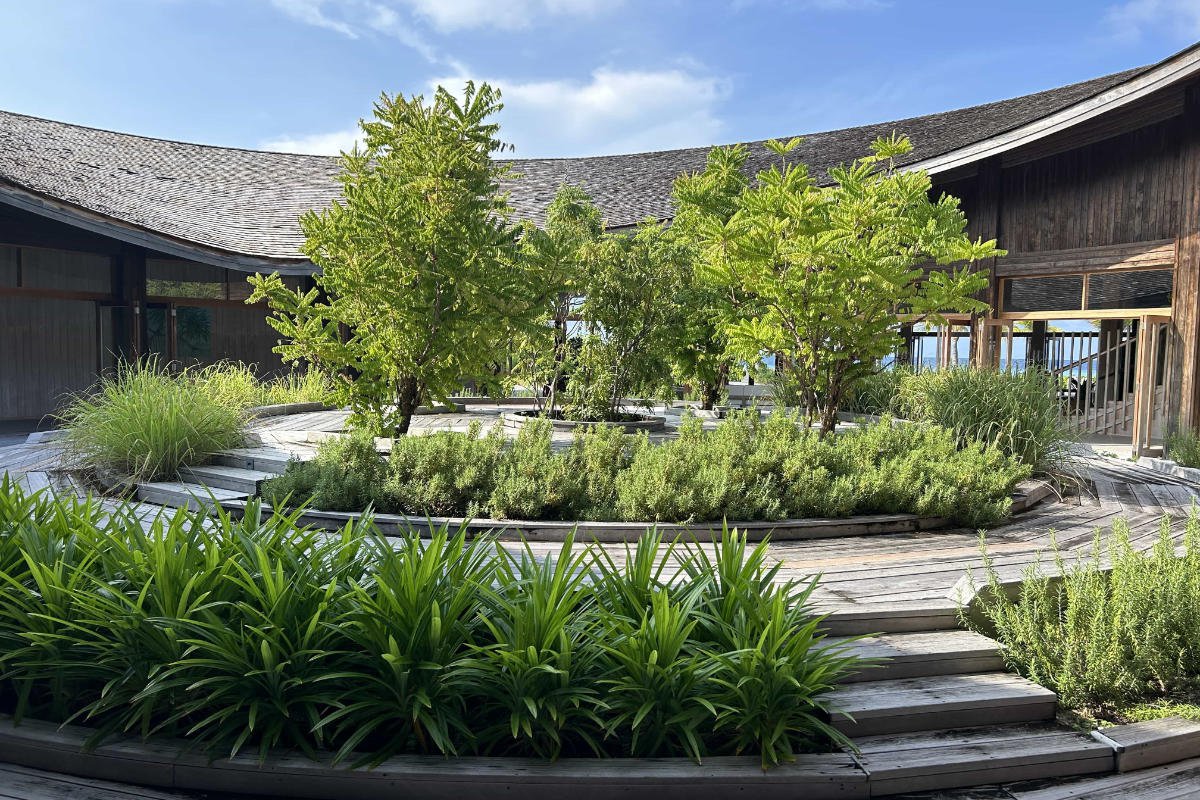
A lovely, bi-level circular building at the center of the resort is home to the restaurants, bars, pool, and game room — the architectural effect is organic and welcoming. I found my way repeatedly to the Baani Spa for sunrise yoga, pre-dinner sound baths, and an exceptional massage (Lidiya has magic hands). I read my novel on a hammock and took a moonlit bath in my outdoor tub. I took shelter under a tree during a sudden rainfall. I dove into the lagoon from my villa deck and swam over to my pal Lucy’s, only to find her asleep on her sun bed. I improved my pickleball game (it really is heaps of fun), and got the breakfast chef to teach me how to make mashuni, the local fish dish I’ve been recreating at home. One of the journalists went fishing, and the chef prepared a feast for us with his magnificent catch. I didn’t look at my phone very much, not even to take my usual haul of photos.
A wooden tablet left on my bed reminded me of the self-care options I could do in five minutes (take a few breaths, stretch your body, listen to my favorite song), ten minutes (meditate on my purpose, read a chapter of a book, journal my thoughts), or thirty minutes (swim in the ocean, walk in the nature, witness the sunset/sunrise). I’m happy to say I checked off all the thirty-minute activities. Had I journaled my thoughts, they would have been “try to feel like you feel in the Maldives when you get back home.”
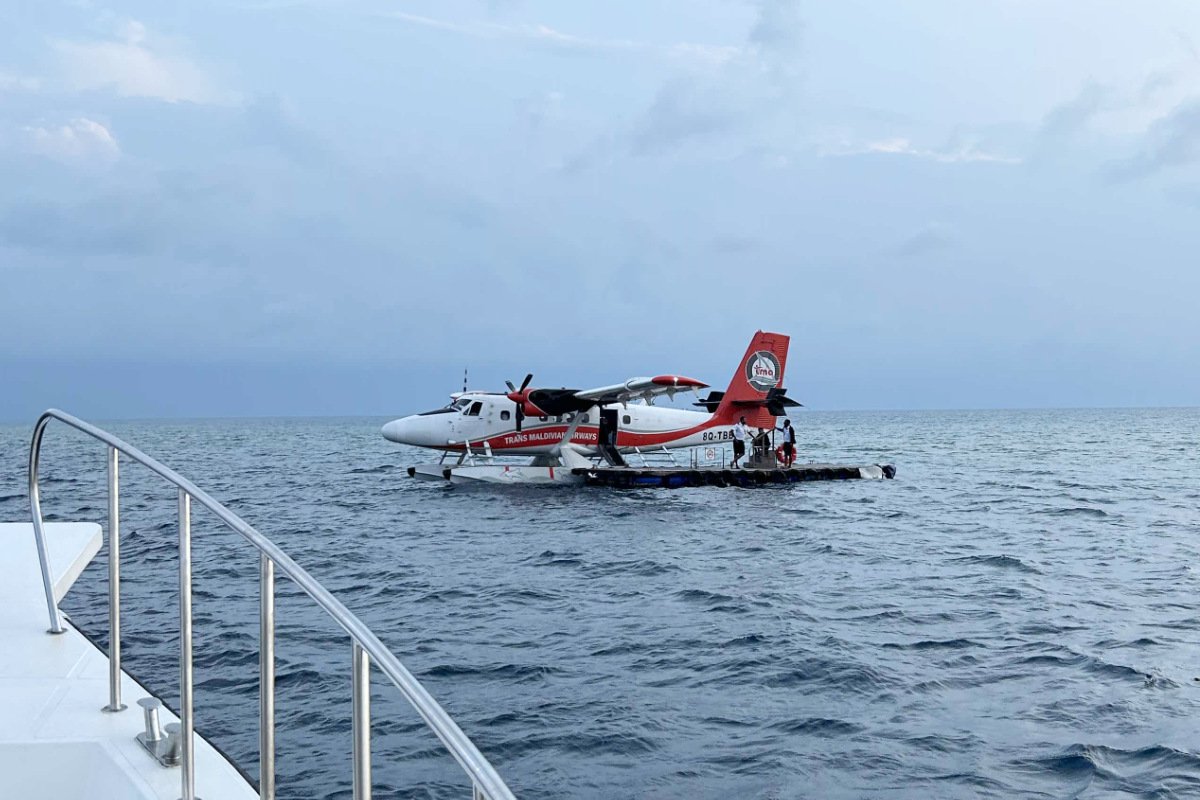
The morning we left, we took a boat that stopped at a tiny dock in the middle of the sea. No more than twelve feet by ten feet, it was half the size of my villas at both Veligandu and Kagi. Waiting at the dock was a seaplane and its flip-flopped crew. “We’ve come to the tiniest airport on earth!” I screamed. What a thrill.
I was delighted to discover this outstanding tropical destination, even if I hadn’t resolved my questions, starting with, are the Maldives sinking from global warming? This is the predominant and seemingly undeniable narrative. But the Maldivian journalist traveling with us told me that this is only part of the story, and that in fact the islands are constantly ebbing and flowing, with some gaining land mass as others lose it. She isn’t worried that her grandchildren won’t have a home here.
As for the fact that so many of Maldivian islands have been colonized by global hotel chains: On the one hand, it feels exploitative. On the other hand, these global hotel chains and the 2.2 million travelers who visit the Maldives have greatly contributed to a tourism industry that, valued at $5.4 billion USD in 2025, accounts for almost half of the country’s revenues.
Geographically and environmentally, it’s undeniable that as a destination the Maldives make more sense for travelers from Europe, the Middle East, and Southeast Asia than it does for those from the Americas, who have easier access to tropical edens in the Bahamas, Cabo, and Bahia.
But I can’t deny the appeal that the Maldives — and especially of the locally owned resorts — hold for anyone craving a slice of paradise.