
Running Laps Amid the Lions
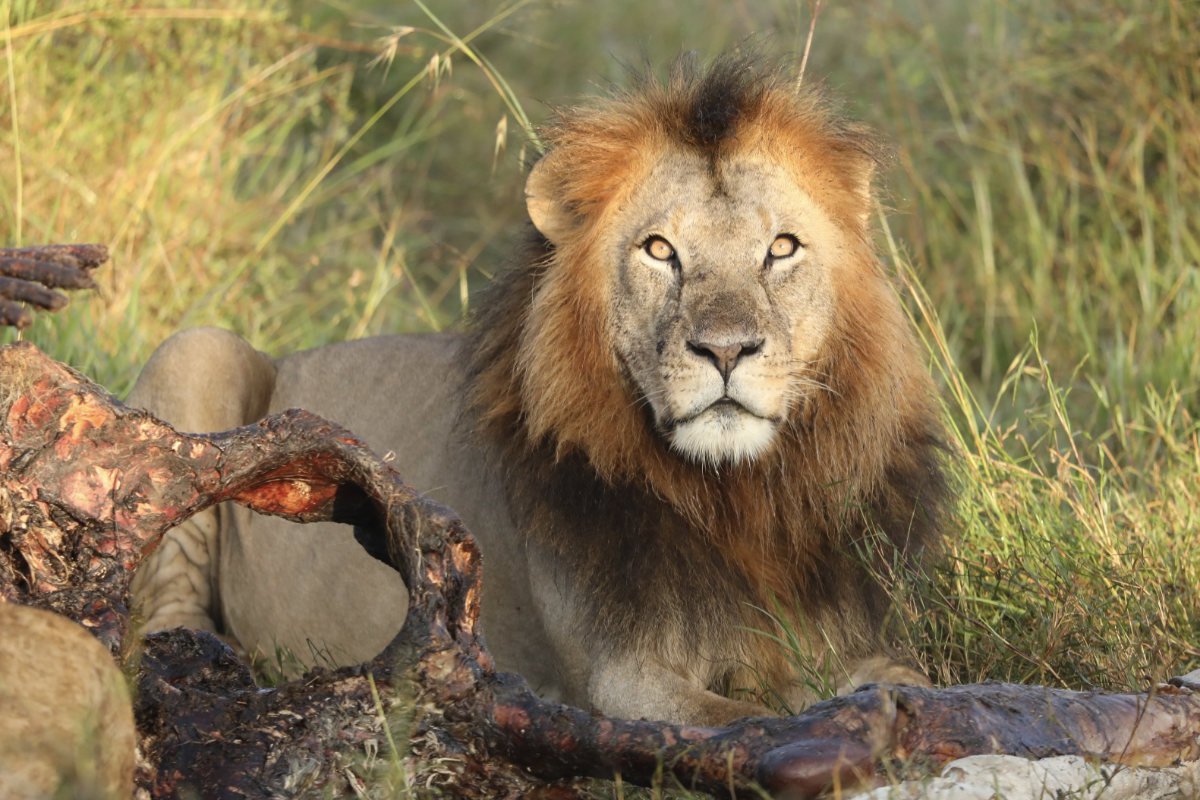 Lions = 1; girafffe = 0. Photo by Oliver Stewart.
Kenya’s safari lodges have started offering travelers everything from spa treatments to quad biking excursions, but few allow their guests to run unaccompanied in such a wild environment. At one family-run lodge in Laikipia, Emma McClelland swaps a game drive for an unforgettable, adrenaline-packed morning — and hopes she can outrun obese hippos.
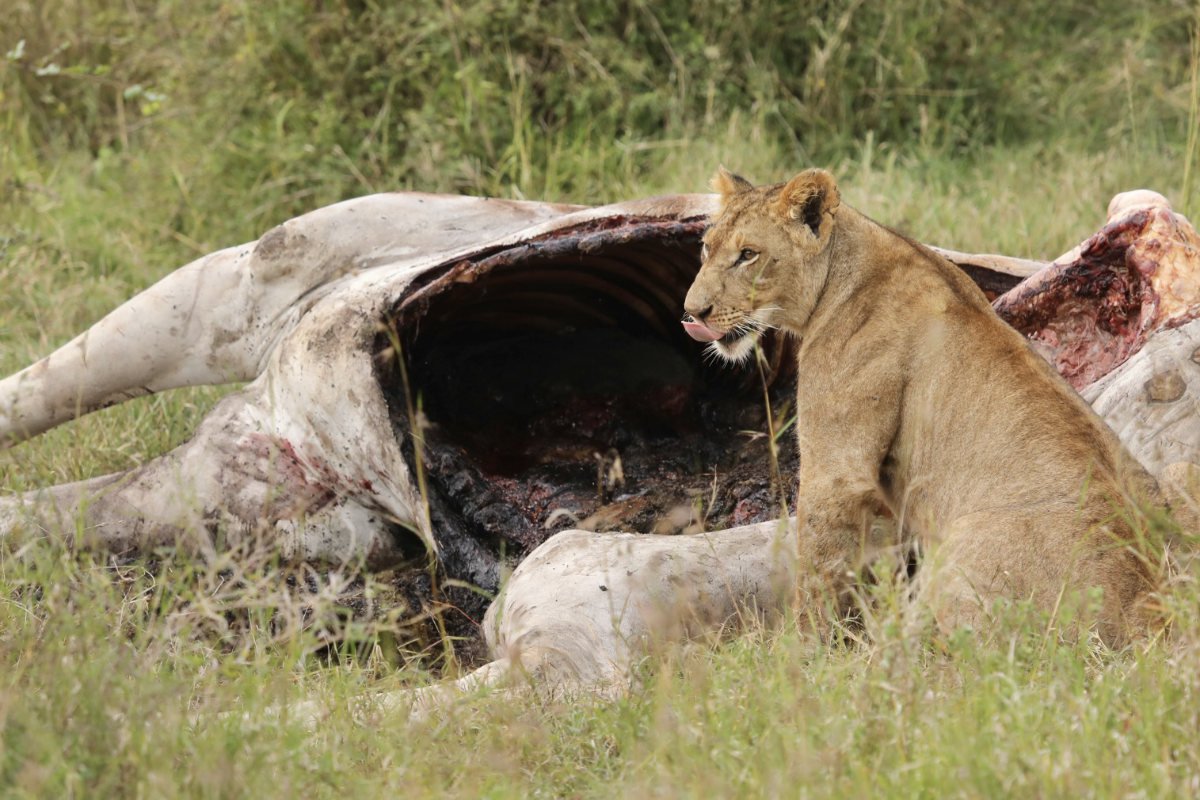
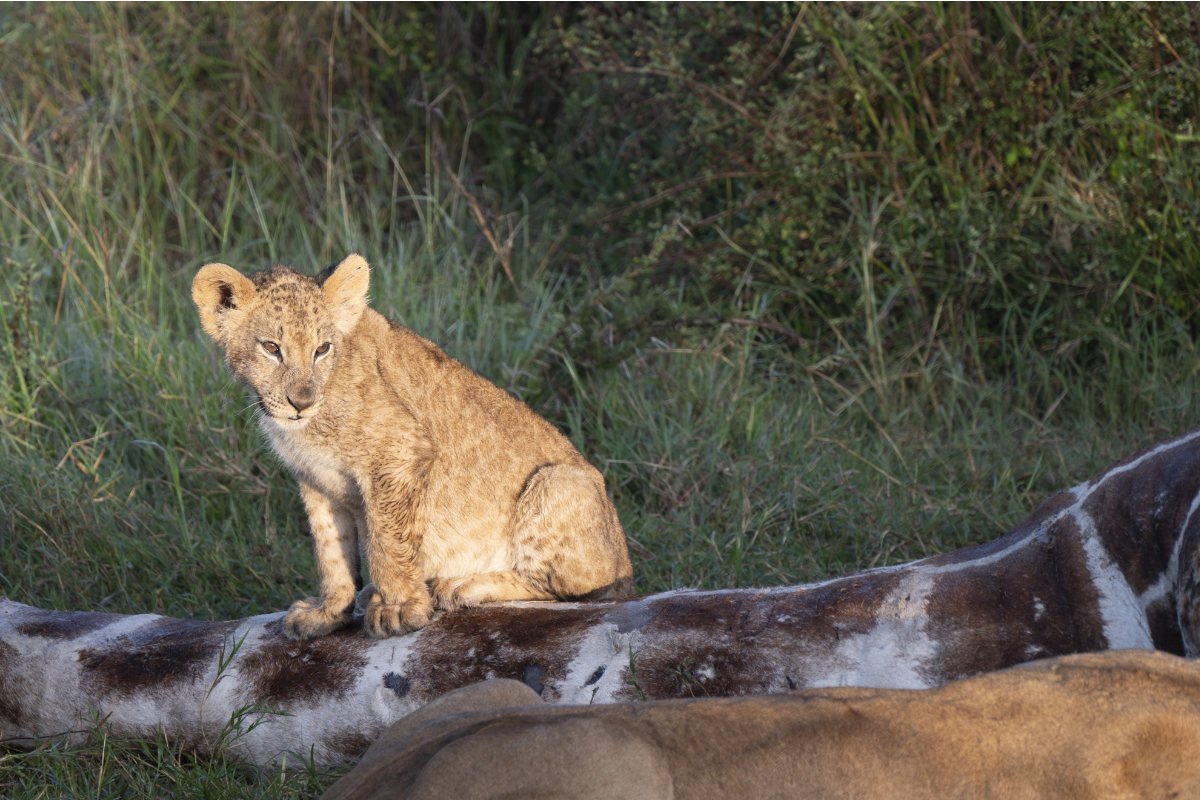
LAIKIPIA, Kenya — Just outside the fenceline lay a dead giraffe, deflated as a popped balloon. If I held my binoculars still, I could pick out the individual hairs on its beautiful brown markings; imperfect squares criss-crossed by channels of creamy white. The animal was pristine — save for the gaping cavity where its midsection should have been. Were it not for this minor detail, I could almost convince myself that the creature was merely sleeping. Until the lions arrived.
That morning, I had sat stock still in a land cruiser watching three young males feed from the grisly hollow between the giraffe’s ribs, silence fractured only by warning growls and the grating sound of skin leaving bone. A few hours had passed since then but, as I walked through the acacia trees in the relative safety of our camp, the noise played on repeat like a stuck vinyl in some distant wing of a haunted house.
I was heading to the running track, the titular warning of safari guide Peter Allison’s book, Whatever You Do, Don’t Run, ringing in my ears. In the bush, running is a sure-fire way to trigger a predator’s chase instinct, making it a terrible choice when faced with a dangerous animal. And, as Allison points out, “Humans are almost laughably slow, not able to outpace even the obese hippo, the top-heavy giraffe, or the surprisingly sprightly warthog.”
A small rock painted with the word “start” told me I was in the right place. I took a moment to make peace with the prospect of being overtaken by a wild pig — a nice change from the pacy pensioners and buggy-pushing parents that usually destroyed my ego.
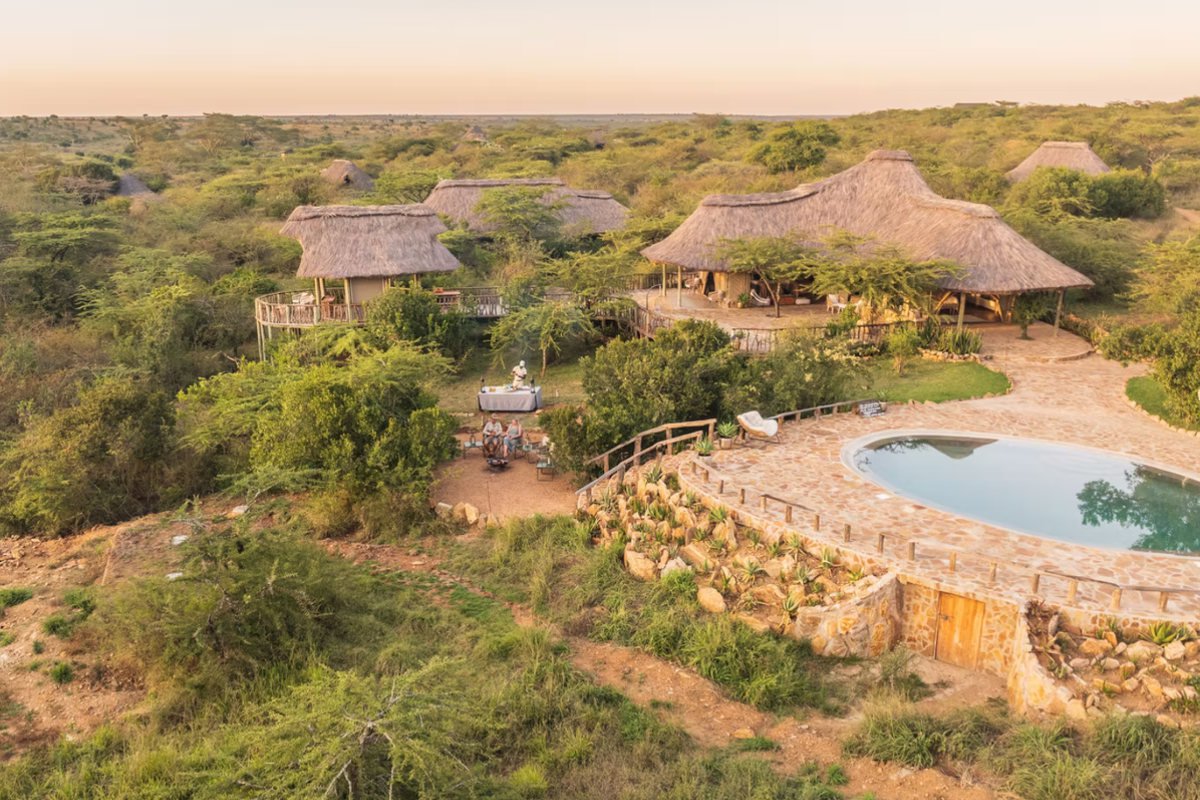
.jpg.1200x800_q85.jpg "an overhead photo of El Karama Lodge in Kenya")
All Paces Welcome
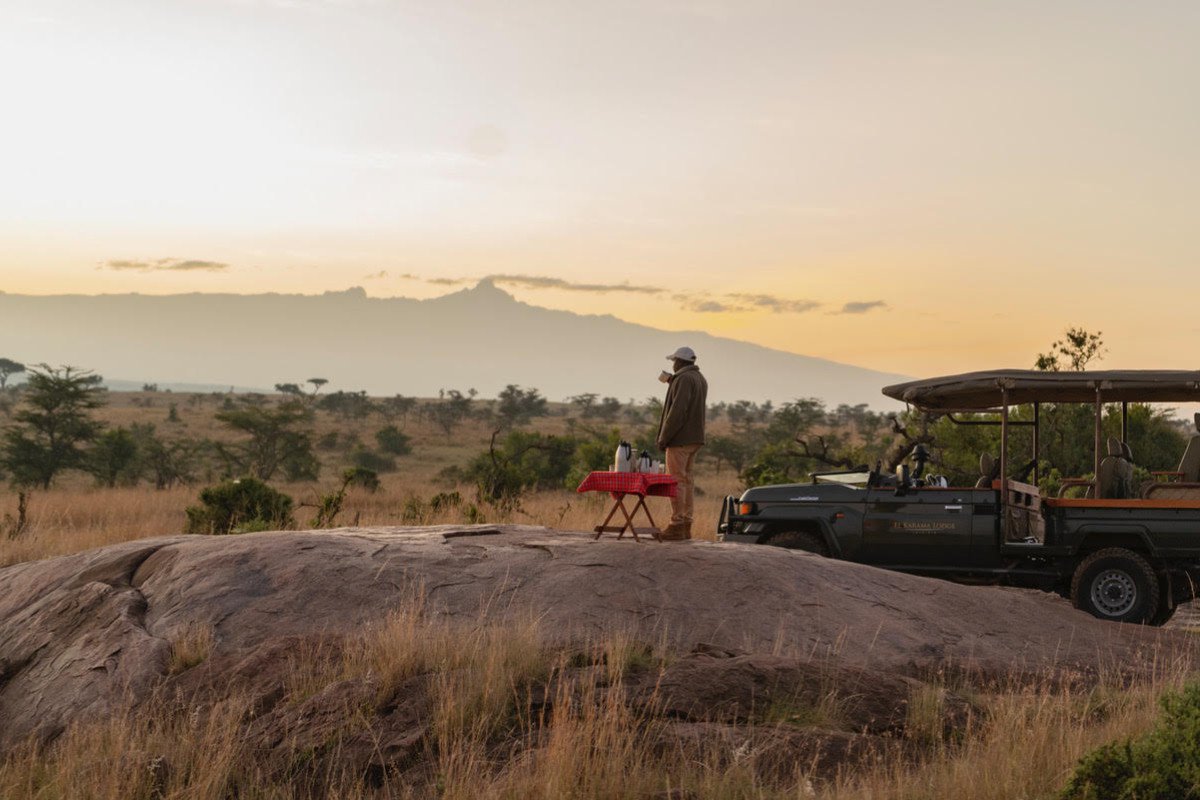
I had jumped at the chance to try out the running track at El Karama, an award-winning safari lodge located on a private wildlife conservancy in the foothills of Mount Kenya. Offering a range of activities, including a bush school for children, it keeps visitors well occupied throughout their stay. But the 750-meter running track — whatever you do, don’t run be damned — is what sets El Karama apart. While Kenya’s High Altitude Training Centre attracts athletes year-round, few safari lodges offer dedicated trails for runners.
Created in 2025, the track reflects El Karama’s holistic approach to safari, something owners Sophie and Murray Grant take great pride in. “Our guests often stay for up to five nights, so we wanted to ensure we had all the right ingredients for them to go home refreshed,” says Sophie, explaining why they added the track to their menu of health-focused features, which include an eco-pool, eco-spa, bush gym, and farm-to-table menus. “Being able to move your body and maintain your fitness while on safari helps you relax and feel at home.”
And it’s not just recreational runners using the track. El Karama recently welcomed world- and Kenyan-champion Eliud Kipchoge as part of the For Rangers Ultramarathon, a five-stage event that takes runners through different wildlife conservancies. As well as providing a thorough test of athletes’ endurance, the ultramarathon also raises funds for rangers on the front line of the anti-poaching movement.
I suspected my experience would bear little resemblance to Kipchoge’s, especially given how ill-prepared I was. Prior to my arrival, I had naively pictured El Karama’s running track as a pronounced ellipsis, surfaced with bouncy, synthetic material and perhaps spraypainted into uniform lanes. I had also imagined that I would be running in a pair of decent trainers. (Cute, right?) Instead, the track was totally inconspicuous, blending perfectly into its surroundings. And my shoes, along with all my clothes, were in a bag that never made it to Nairobi.
A fellow traveller loaned me their shorts and a sports bra, but footwear was another matter. I looked down at my sneakers, designed purely for aesthetics, and wondered what would get me first – shin splints, blisters, the unrelenting heat, the altitude, or an obese hippo. At an elevation just under 2000 meters, the track at El Karama is perfectly positioned to test anyone’s cardiovascular health.
Safety in the Wild
Sophie’s advice for runners was mostly rooted in common sense: Stay hydrated and fueled and wear hats and sunscreen. But she added tips I don’t often hear back home in Britain. “While our lodge compound is fenced, and all tracks are kept clear to ensure good visibility, we also instruct runners to never use ear phones, pods, or music ever when running. It’s important to be aware and responsible in this environment, and your hearing is imperative.”
Sophie also acknowledged my thoughts about Allison’s book, adding: “Running in the bush is sort of the antithesis of what we are taught as guides, which is to be slow, considered, and observant in order to anticipate risk. But most of my runs have been pretty uneventful. While I’ve had curious giraffe approach the fence to investigate what I’m doing, most of what I see and enjoy is the beauty of the landscape, the feeling of sun on my skin, and the little dik-dik that often run across my path.”
As I launch into an optimistic pace that will soon prove unsustainable, I wonder how “uneventful” my run will be. While I concede that being studied by giraffe is probably one of the more uncommon occurrences, my hope is that I will be cheered from the sidelines by one or more of Kenya’s beautiful birds. The country has thousands, from the improbable secretarybird — a raptor that looks like it’s wearing office attire — to the iridescent superb starling — a stunning bird that’s as ubiquitous here as pigeons are in Britain.
Finding the Rhythm
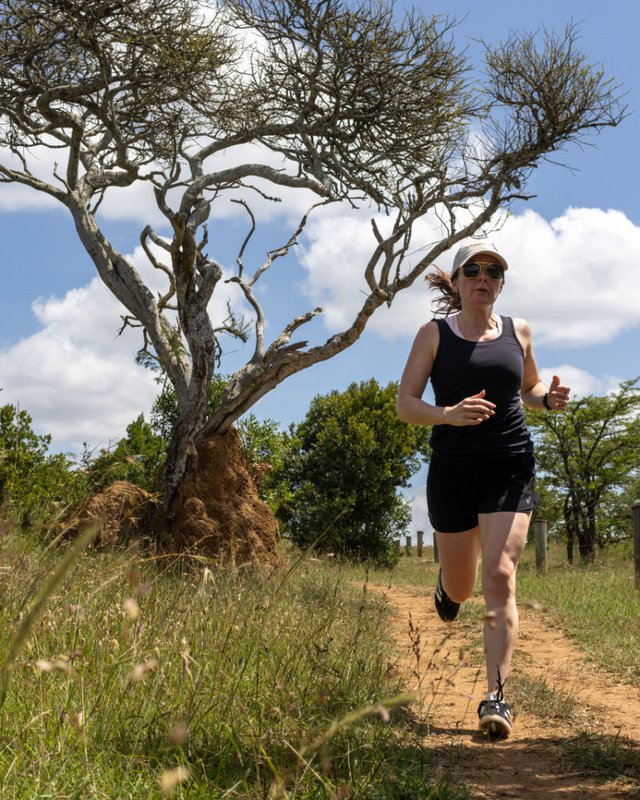
At first, I don’t see a single animal. I begin to feel the itching sensation of rapidly beading sweat forming at the base of my neck and tug my cap lower. Then I find the track’s first surprise — a sneaky incline, every runner’s favorite. It’s too subtle to notice at first, but prolonged enough to trigger the intrusive bite of lactic acid. My pace feels lousy. I imagine a stout little warthog trotting on my right like a hairy pacesetter and speed up slightly. The heat is stifling.
To distract myself, I focus on the novel terrain. Underfoot, vibrant orange soil kicks out clouds of dust. I notice channels where rivulets of water have carved up the surface, and occasional piles of animal dung that I don’t have the skills to identify. They seem too large to belong to dik-diks – tiny, almost unbearably cute antelopes with large eyes and pointy snouts — but must come from something small enough to get through the fenceline.
Every now and then, my eyes are drawn to a towering termite mound — a familiar sight in the African bush, but no less impressive. While the tall towers are imposing, providing protection and a nifty air conditioning system, the critters’ crib is actually underneath, comprised of various chambers for storing food, raising larvae, and housing the queen. This is a far cry from the street furniture I normally observe on my weekly runs.
Feeling the Heat
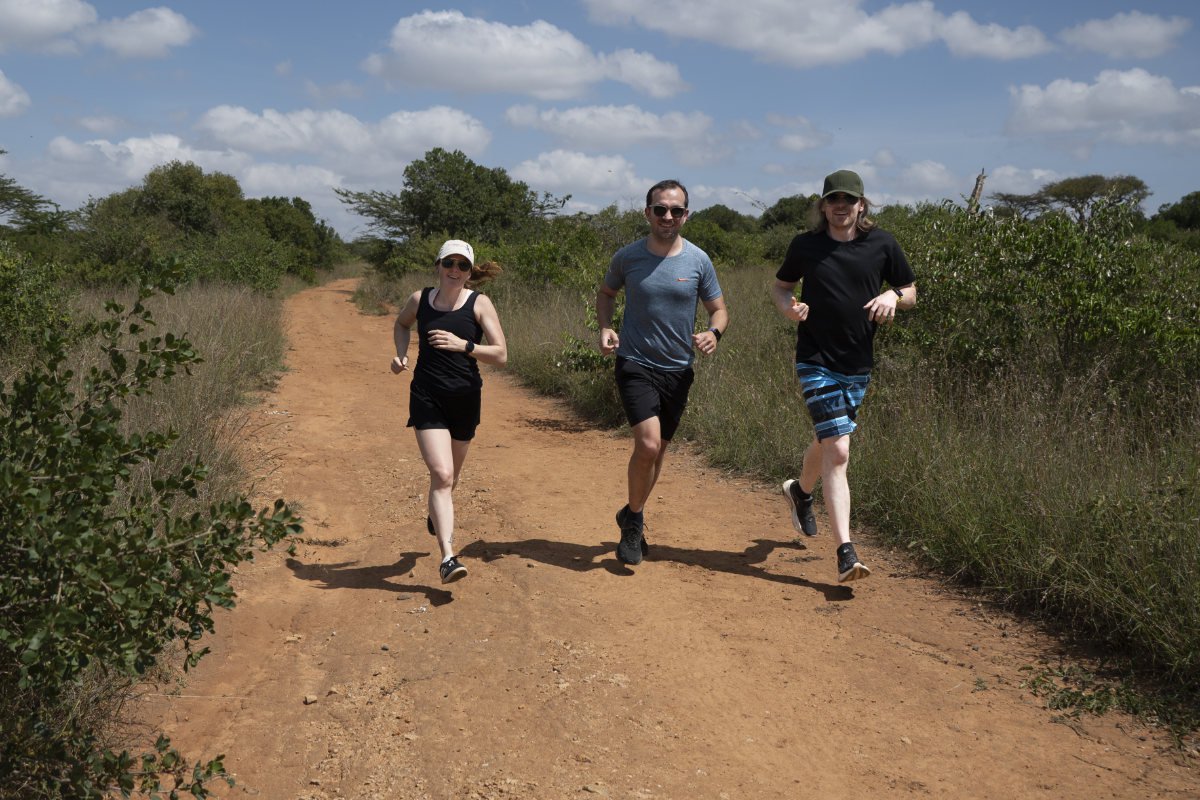
Each kilometer takes me six minutes, around 80 seconds slower than my normal pace. My brother, who has already been on the track for ten minutes, sprints past me. As he rounds the corner out of sight, I can hear his breathing. By the time I find him again, he is doubled over with his phone in his hand, smiling but pouring with sweat. He has bagged KOM, the King of the Mountani crown on the workout tracking app Strava.
My partner, also a keen runner, sheepishly offers to return to the lodge to get his camera to take photos. I can’t blame him; the midday sun is unforgiving, and I am close to my limit too. My shins are screaming in protest, and my little toe is throbbing. I can already imagine the blister that has formed there, but I’m reluctant to cut this once-in-a-lifetime experience short.
A flash of green catches my eye and I smile as a little bee-eater lands on a branch by the track. The sighting spurs me on, diverting my attention from the track ahead and out into the bush. Even the spiky acacia thorn trees and tufts of tenacious grass are interesting to look at. The scenery keeps me going for another twenty minutes, at which point I admit defeat, increasingly concerned about the damage being inflicted by my footwear. The three of us return to the lodge.
Lessons from the Bush
In the weeks that follow, I realize that running in the African bush had certainly been humbling — slower, harder, and more precarious than any run I’d done before — but it had also demanded something I rarely gave on my usual routes: total presence. No music to distract me, no familiar landmarks to zone out through. Just heat, dust, the possibility of wildlife, and the rhythm of my own labored breathing.
A month after our return to the UK, I receive a text from my brother. His KOM has been snatched by a Swedish runner, whose comment on the activity reads: “Damn, how syrupy it feels at this altitude.” I laugh. It’s the perfect description: that sluggish sensation of air that refuses to co-operate, and lungs that can’t catch up. The track at El Karama may not have made me faster. But it has given me something better: a story, a memory, and the satisfaction of knowing I’ve run somewhere truly extraordinary. Blisters, lost luggage, and all.
Plan Your Trip
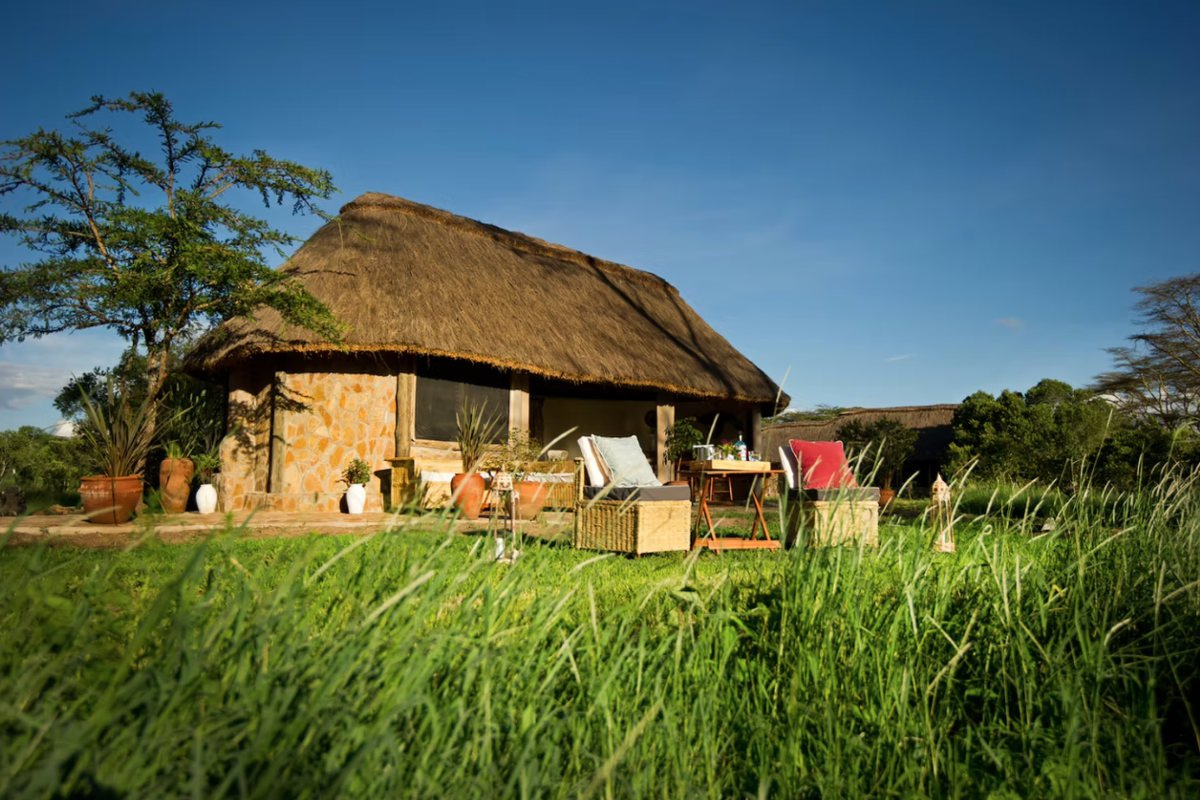
El Karama Lodge is a family-run property in Kenya’s Laikipia region. With ten cottages accommodating up to 24 guests, the vibe is intimate and homely, with multiple dining areas ensuring privacy and comfort.
To get there, we flew into Nairobi’s Jomo Kenyatta International Airport, where we were met by Bush & Beyond, the local partners of safari specialists Aardvark Safaris, who organized our trip. They transferred us to Wilson Airport (about 30 minutes away), where we boarded a Yellow Wings private charter to El Karama’s airstrip, where staff met us on arrival and drove us to camp.