
How Do You Say "Deep Breath" in German?
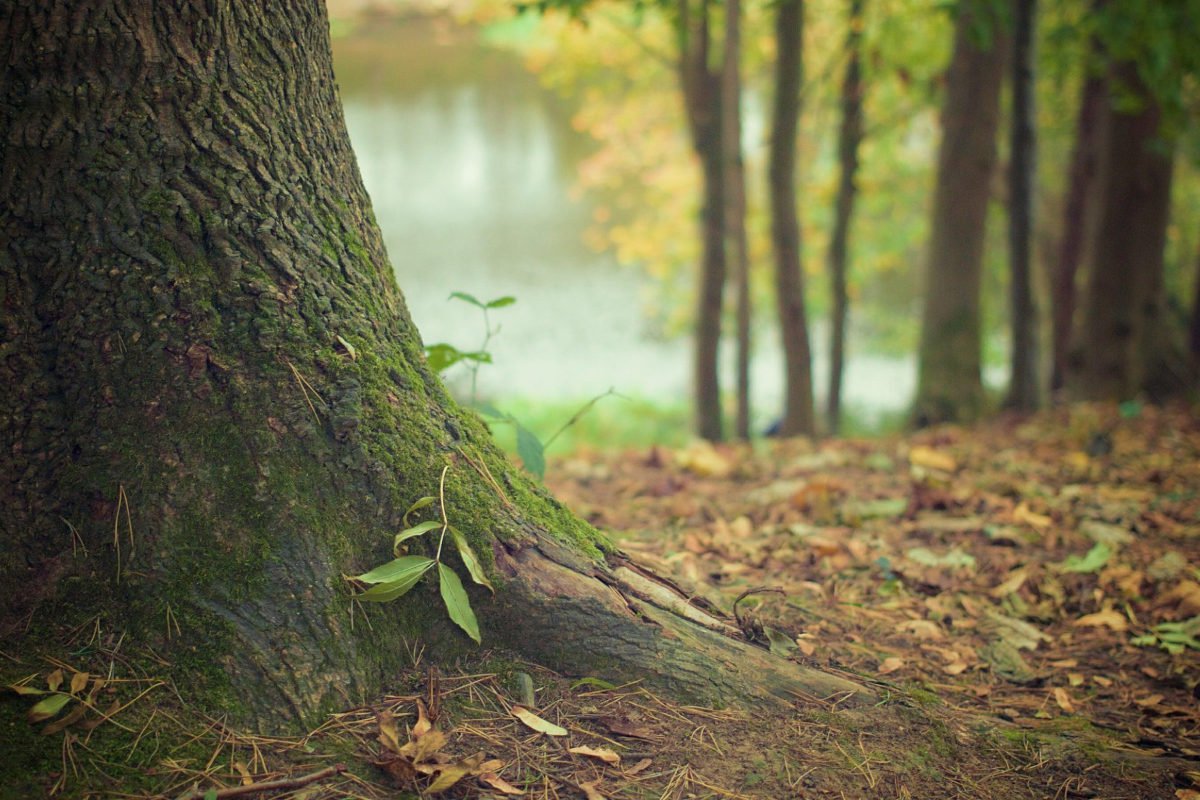 Photo courtesy of Waldbaden in Hessen.
It was pitch black when I arrived in Laubacher Wald, a German forest amid one of Europe’s largest volcanic land masses. Though I’d lived in Germany, I’d never heard of the Vogelsberg volcanic district. Around an hour north of Frankfurt, this little-known region is one of quaint, timber-framed villages, cafés serving excellent cake, and something else I didn’t know existed: fresh air spas. Different from traditional spa towns with thermal waters, “Luftkurort,” which translates as “air spa,” is an official designation and certification given to areas whose air quality is considered medically beneficial and healing. The town of Laubach holds this distinction.
I stayed at Waldhaus, a family-run property emphasizing gourmet food harvested from the surrounding forest, cooked by the youngest generation. A dining room filled with forestry finds and rare spirits was empty when I arrived. The brother-and-sister chef duo entertained me over rich venison ragout, wild mushroom salad, cranberries, and knödel made according to local tradition with produce sourced from pre-dawn market runs. I wasn’t planning such early starts. I wanted to explore the fresh air spas that remain one of Germany’s best-kept wellness secrets at a more leisurely pace.
Breathing the Difference
Dawn broke over a rainy landscape. After a swim in the hotel pool, I was pulled into the magical ring of green surrounding me. The quality of the air hit differently than most gulps do — crisp, clean, restorative — as I walked ten miles seeking Hansel and Gretel villages. (I live in Paris. I’m all too familiar with bad air from consuming non-stop secondhand smoke and pollution.)
My destination was the timber-framed village Schotten, which dates back to AD 780 and was controlled by noble families until feudal revolution changed everything centuries ago. I stopped at Café Zeitlos, where the cake was so exceptional I ordered two slices.
That afternoon I went on a botanical tour organized by the local Laubach tourist office and led by young guide Jakob Nolte through château grounds. Jakob took us through historical apple orchards, plucking fruit from trees along the way, having us taste different berries and marvel at the tree diversity within the Schlosspark. The tourist office offers tours and connections to locals available for sports, swimming, culinary activities, and walks — all designed to maximize the forest and fresh air.
The next morning I went on a small group forest bathing expedition with local company Waldbaden in Hessen — a few hours of tai chi, wandering, storytelling, breathing exercises, and discovering unusual graves at tree bases. After gourmet currywurst in the castle grounds for lunch, we took an epic bike ride along new paths linking three major villages.
Following the Rhine
While there's no such thing as enough fresh air, I only had days to spare before returning to Paris, so I made my way along the Rhine to explore another slice of Germany. My first stop was Bingen, a town nestled between Rüdesheim and Bacharach (two of Germany’s prettiest destinations) in the UNESCO World Heritage Upper Middle Rhine Valley. The area was once fashionable with Wolfgang von Goethe and his contemporaries but today mainly draws German tourists who sail past to glimpse the mythical Lorelei mermaid and Japanese visitors who head to boisterous Rüdesheim across the water. I stayed atPapa Rhein Hotel, a fabulous place run by a local family with beach-style accommodations, a spa, rooftop pool, outdoor cinema, Michelin-level cuisine, and a hipster sensibility, and took in the permanent exhibitions about legendary writer/composer/nun Hildegard von Bingen at Museum am Strom. (Eibengen, the abbey she founded, is nearby.) I wasn't in town to see the Skulpturen-Triennale Bingen sculpture expo held every three years, but I did enjoy the many Weinstuben lining the waterfront that make Bingen a wine lovers’ haven.
I continued down the river on a KD Cruise to Baden-Baden, another spa town in a forest, though this one much better know. I checked into Roomers Baden-Baden, a refreshingly contemporary, design-driven alternative to the old-world hotels in this historic spa town. The surround balcony with loungers overlooking the forest, designer rooms by Piero Lissoni, and fabulous pan-Asian food at on-site restaurant Moriki proved compelling reasons to stay in — and were far more glamorous than the local Caracalla thermal baths. I didn’t have time to bike and hike through the adjacent Black Forest. That’s reason enough to come back.